Biarritz, Basque Country: 7 ways to live between ocean and mountains
One foot in the surf, the other in the mountains, the Basque Country does nothing by halves. A language like no other, food with real character, waves at the foot of the lighthouse, and a knack for sweeping us along before we know it.
Table of contents
You’ll love
Catching the first wave at the Côte des Basques
Climbing the Rhune on the rack railway
Tasting chilli, ham and chocolate in the market halls
Stepping inside a Basque weaving workshop
Feeling the thrill of the pelota hitting the wall in a trinquet
Saint-Jean-de-Luz and the resorts of the Basque Coast
In Saint-Jean-de-Luz, the ocean settles down. Its bay, closed off by sea walls, holds a calm beach where children paddle while, just behind, the trawlers unload their catch. You wander past the shipowners’ houses with their red shutters, to a few bars of Ravel’s Boléro — the composer was a local boy. You linger on Place Louis-XIV, where the Sun King married the Spanish infanta. A macaron still warm in your hand, you pick up the trail of the corsairs…
Each resort holds its rank in its own way. Biarritz turned the heads of Napoleon III and Empress Eugénie, who left it villas and palace hotels facing the Grande Plage. Guéthary keeps a low, arty profile, Bidart watches from its cliffs, Anglet guards its Chambre d’Amour and its legendary cave, and Hendaye already has one foot in Spain.
Yes, really : it was here, in the late 1950s, that the first boards cut into Europe’s waves. Ever since, Biarritz has welcomed each new generation of surfers with open arms. At the Côte des Basques, you walk down the cliff steps barefoot, wetsuit half on, watch for the set, and throw yourself in. Level doesn’t matter: the wave forgives, and you come out rinsed clean, salt on your lips and the goofy grin of a good morning. In town, the Maison du Surf tells this story that clings to Biarritz’s skin.
Along the coast, every spot has its legend: the long beaches of Anglet, the edgy wave of Parlementia at Guéthary for strong arms, the sandbanks of Hendaye for taming your first rollers.
Worth a try: surf a perfect wave on the simulator at the Cité de l’Océan, then go and see the sharks at the Aquarium de Biarritz.
La Rhune watches over the Labourd. The sacred mountain of the Basques: the brave climb it on foot, but the easiest way is to let the rack railway haul you up, creaking with wood and iron as it goes at walking pace. On the way, Pottok ponies graze and now and then spare you a glance; a vulture wheels high above. At the summit, 905 metres up, the wind ruffles your hair: the ocean on one side, the Pyrenees on the other.
From up there, you can make out the paths that thread through the hinterland. For centuries, the pilgrims of St James have followed some of them, a scallop shell on the pack, from Saint-Palais to Ostabat and on to Saint-Jean-Pied-de-Port and its citadel, the last stop before Spain. You don’t need to believe to slow your step, greet a fellow walker and drink in the green horizons.
Worth a try: the climb at dawn, when the mist still clings to the ridges and the valley sleeps.
Labastide-Clairence and the villages of the Basque hinterland
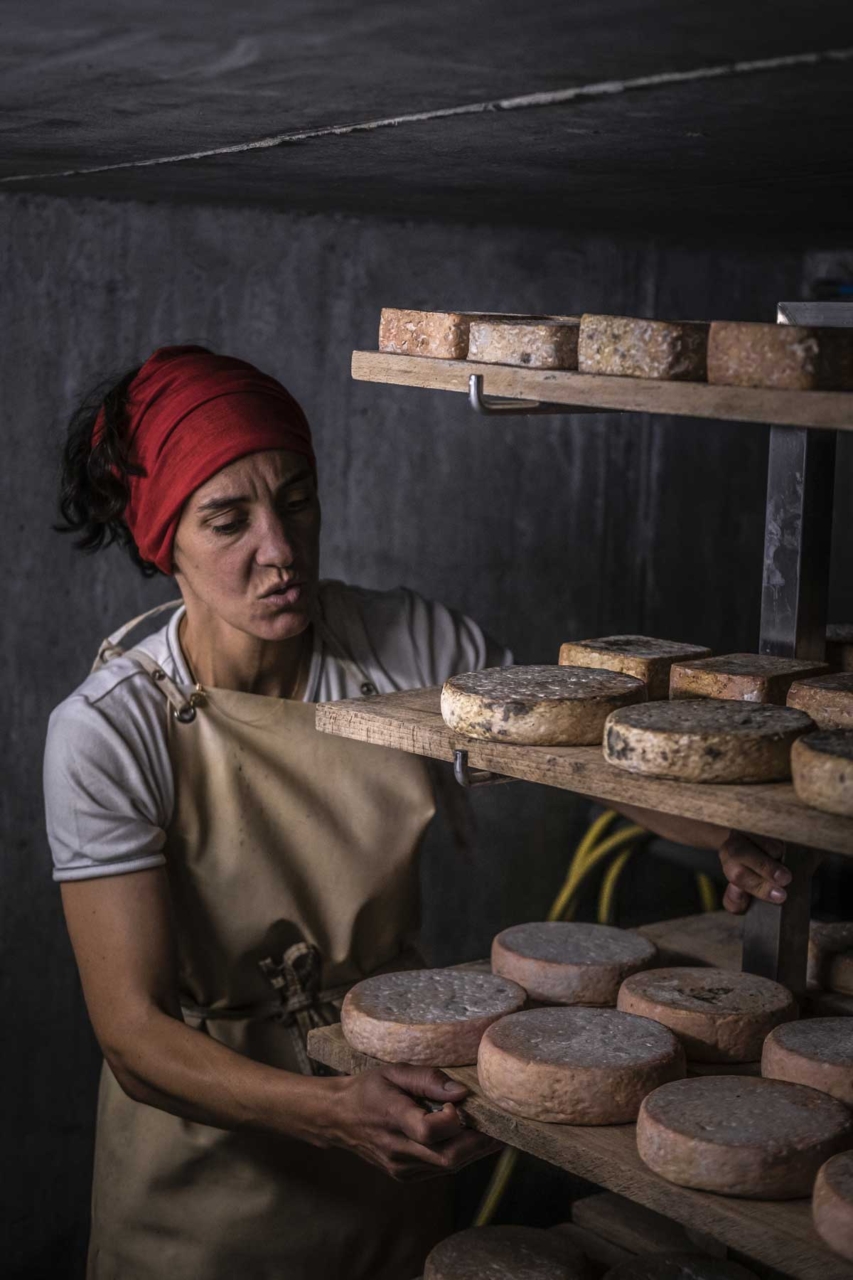
Leave the coast, climb inland, and let the Basque Country reveal another side of its soul. The same white houses streaked with red and green, the same fronton waiting for the next game of pelota, the same good little places to eat. Ainhoa, Sare, Espelette and its strings of peppers. You stroll without a watch, cross paths with a flock, stop for a sheep’s cheese handed to you by the person who made it.
Labastide-Clairence adds its own touch. This old bastide, listed among France’s Most Beautiful Villages, keeps its treasure at the top of the main street: the church of Notre-Dame-de-l’Assomption, ringed by a covered gallery paved with funerary slabs. Beautiful and very much alive, it shelters the studios of artists and craftspeople, where wonder is never in short supply.
Worth a try: reach the villages by electric bike or bus — the Txik Txak network climbs all the way up.
Basque gastronomy, all the way to Biarritz harbour
You don’t explore the Basque Country on an empty stomach! Everything calls you to the table: strings of Espelette peppers drying in the sun, ham carved by hand off the bone, chocolate that scents a whole street in Bayonne. Flavour, here, has character — fiery and gentle at once, just like the land itself.
Come evening, head down to the Port des Pêcheurs in Biarritz. Among the crampottes, the little fishermen’s huts crowded at the water’s edge, a grill smokes, someone laughs, the boats tug at their moorings. You sit down almost with your feet in the water, a glass of Irouléguy in hand, and you understand that this chic town has never stopped being a fishing port.
Worth a try: a workshop to roll your own pintxos, then eat them on the go.
Basque linen and the hands that make the Basque Country
Some gestures you never tire of watching. The shuttle darting between the taut threads of the loom, and the Basque linen taking shape stripe by stripe, those bold bands first woven to protect the backs of oxen. The workshop smells of wood and cotton, and the weaver talks about the work the way you’d tell a family story.
All around, hands are still busy: the beret shaped with a turn of felt, the makhila (the traditional walking stick) carved from medlar wood and tipped like a piece of jewellery, the espadrille stitched in Mauléon-Licharre, the chistera curved to catch the pelota ball. You rarely leave empty-handed, and often with the name of the woman or man who made the piece.
Basque pelota and the living traditions of the Basque Country
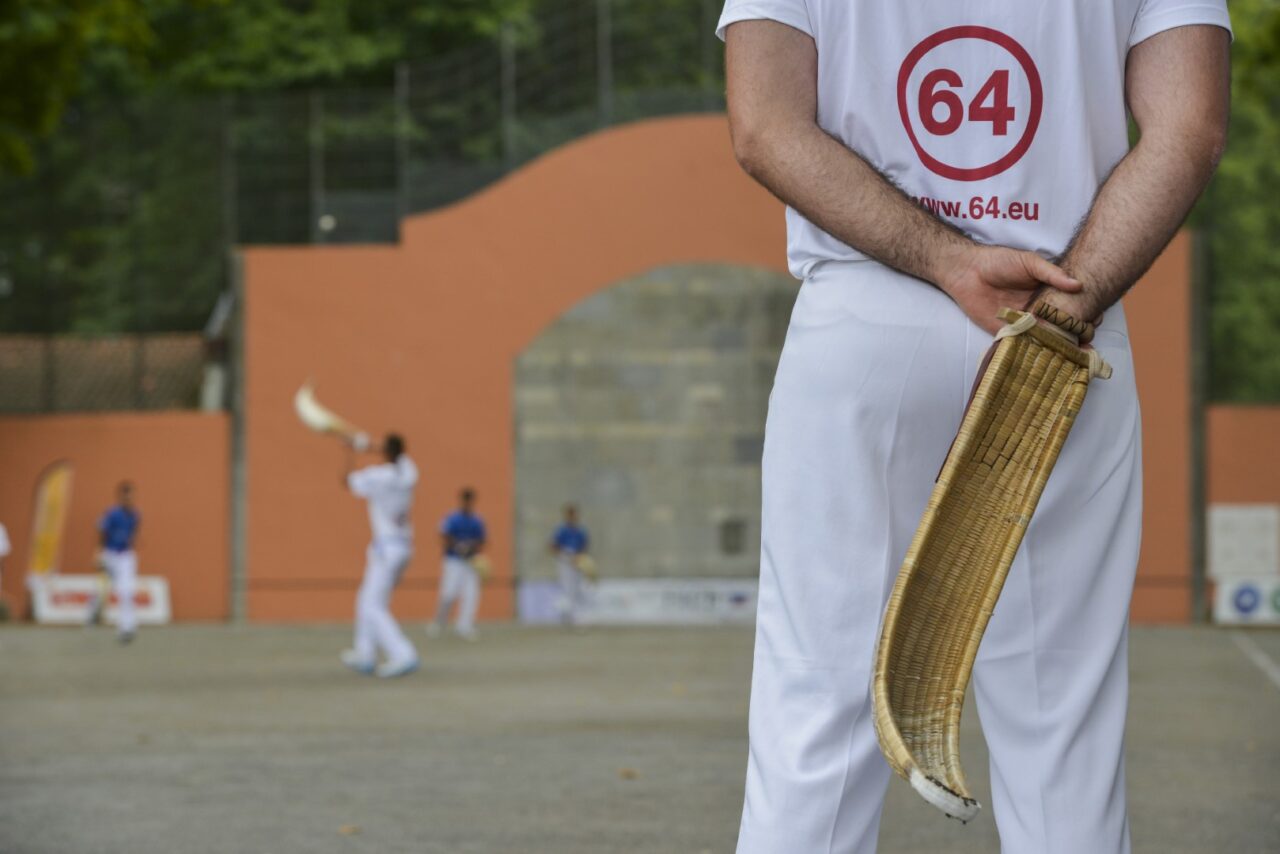
Push open the door of a trinquet, the enclosed court where pelota is played off the walls themselves. The spectators press back out of the way, the ball flies, the sharp crack rolls in echo, then silence falls before the next exchange. Bare hand, leather paleta or the great chistera, the game varies but the intensity never drops. You come out with your heart pounding, as if you’d played yourself.
Pelota is only one way into Basque culture. Here, people sing in many voices, dance the mutxiko on the square, lift stones and bales of straw in feats of Basque strength. When carnival comes, the mascarades travel from village to village; in summer, a whole town stages its open-air pastorale. And when the txalaparta sounds (wooden planks struck by four hands) you hear the soul of the Basque people beating time.
Worth a try: an introduction to pelota, offered by clubs all along the coast.
Set off to explore our destinations: from the foothills of the Pyrenees to hidden villages, from surfing sessions on the coast to hikes in the wide open spaces of the Limousin. You’re bound to find a holiday that takes your fancy.
To find out more about the destination or the experiences on offer there, here are a few pages that invite you to continue your exploration, either online or in person.