The spirit that conquered the world

Cognac: 9 ways to experience the town, the vineyards and the Charente

Its brandy is known the world over. Less so the town that gave it its name, the river running through it, and the vast vineyard around it — the largest in Europe, in fact. From Cognac to Saintes, from Angoulême to La Rochelle or Rochefort, everything connects along the Charente, by bike, by gabarre or by train.

Linking town, vineyards and ocean by bike or train

Going from the harbour of La Rochelle to the Abbaye aux Dames in Saintes, by way of the salt marshes of the Charente islands

Tasting at the source, from cognac to oysters to the local produce of a shady picnic

Travelling through time, from a Roman amphitheatre to the painted walls of Angoulême

Discovering the unexpected: a cave church, a maritime arsenal, a house-museum like no other

©Distillation dans un chai de cognac / Sébastien LAVAL / Charentes Tourisme

Into the secret of the cellars

The cognac houses and the birthplace of François I

Let’s start with the spelling: Cognac the town takes a capital, cognac the brandy stays lower-case. For the rest, you push open the door of a great house (Hennessy, Rémy Martin, Martell, Camus) or of a smaller estate. The cellar master reveals the double distillation, the blending, the long patience of ageing. Every sense awake, you taste a vintage asleep in a hundred-year-old cellar.

The town reads like an open book: you walk in the footsteps of François I, born at the Château Royal on the banks of the Charente, and wander the old streets to the Musée des Arts du Cognac. Then you head up for a cocktail on the rooftop of the Indigo by Martell or the Chais Monnet, letting the amber tones in your glass answer those of the sunset.

Where cognac takes root

A ride through the cognac vineyards

The moment you leave town, the vineyard unfolds, soft and rolling, until you can smell the Atlantic at the end of the rows — Île d’Oléron included! No grand châteaux for show here, but farms, family distilleries, lanes where you meet more tractors than cars. You stop at a winegrower who tells you what he brought to his grandfather’s distilling method, and taste pineau des Charentes, a blend of grape must and cognac served chilled as an aperitif.

Best of all is to take your time: an electric bike between two villages, a picnic among the vines. You push open the door of a cooper bending his staves over the fire, and leave with a bottle and the name of the man who made it.

Worth a try: a ride in an open-top 2CV along the vineyard’s back roads, wind in your face.

©Vignobles de Cognac / S.Pailloncy_CRTNA

©Kayak sur la Charente / Destination Cognac

Rollin’ on the river

The Charente by bike, by gabarre or by canoe

The river is the thread of the whole destination. You take it in at your own pace: from Cognac, La Flow Vélo runs to Jarnac, hometown of François Mitterrand, or to Saintes, well away from the cars, between vines, guinguettes (riverside open-air bars) for a drink, and leafy spots to picnic with your feet in the water.

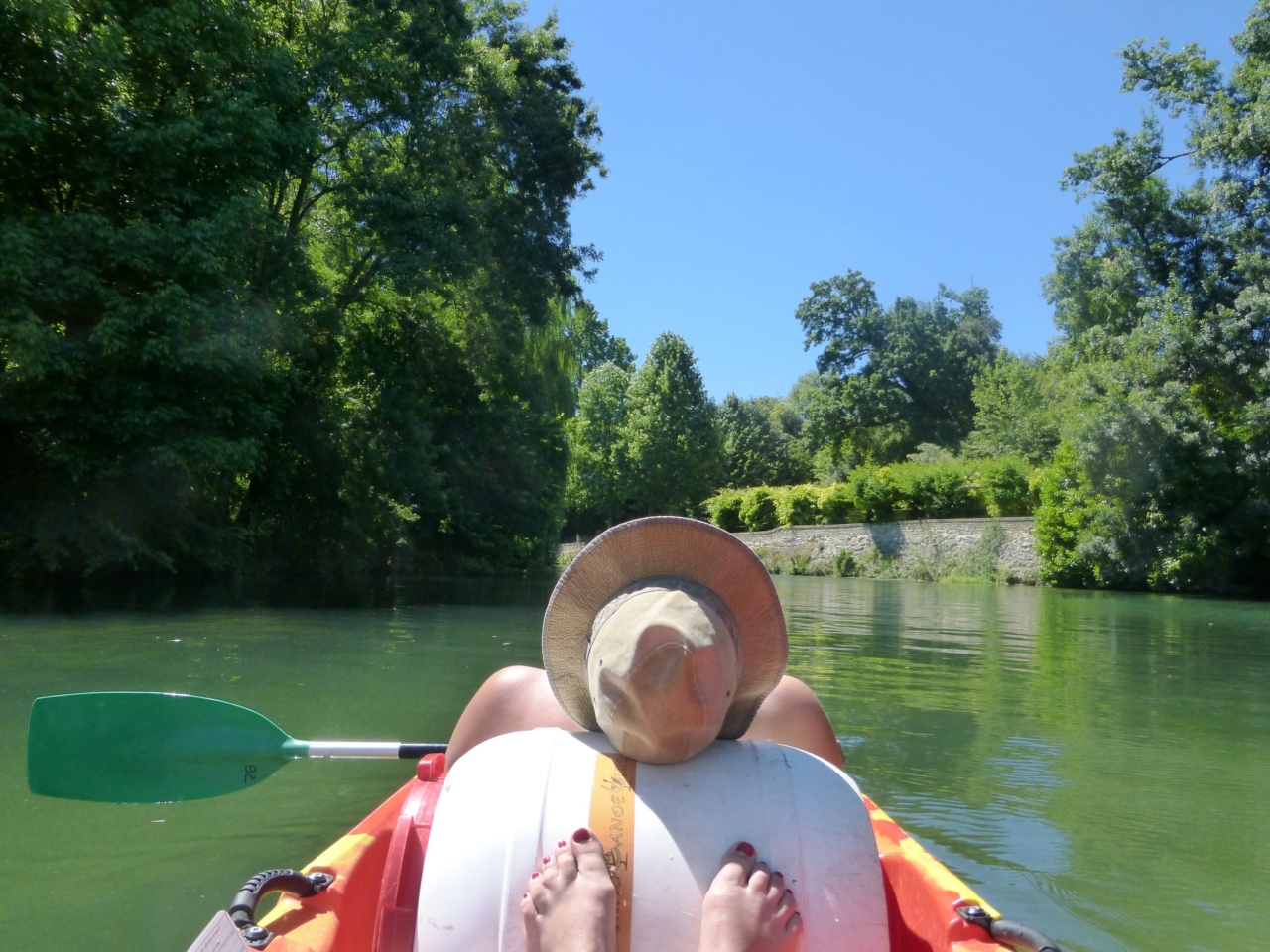
Taking to the water changes the view again. At the foot of the Château Royal you climb aboard a gabarre, one of those traditional flat-bottomed barges. Or, more gently still, you choose the canoe to seek out the treasures along the banks — and the perfect spot for a reading-nap. Come evening, the Angoulême–Royan train brings everyone back without the effort, stations at Jarnac, Cognac or Saintes.

Float downstream, drift back in time

Saintes, a journey through Antiquity and the Middle Ages

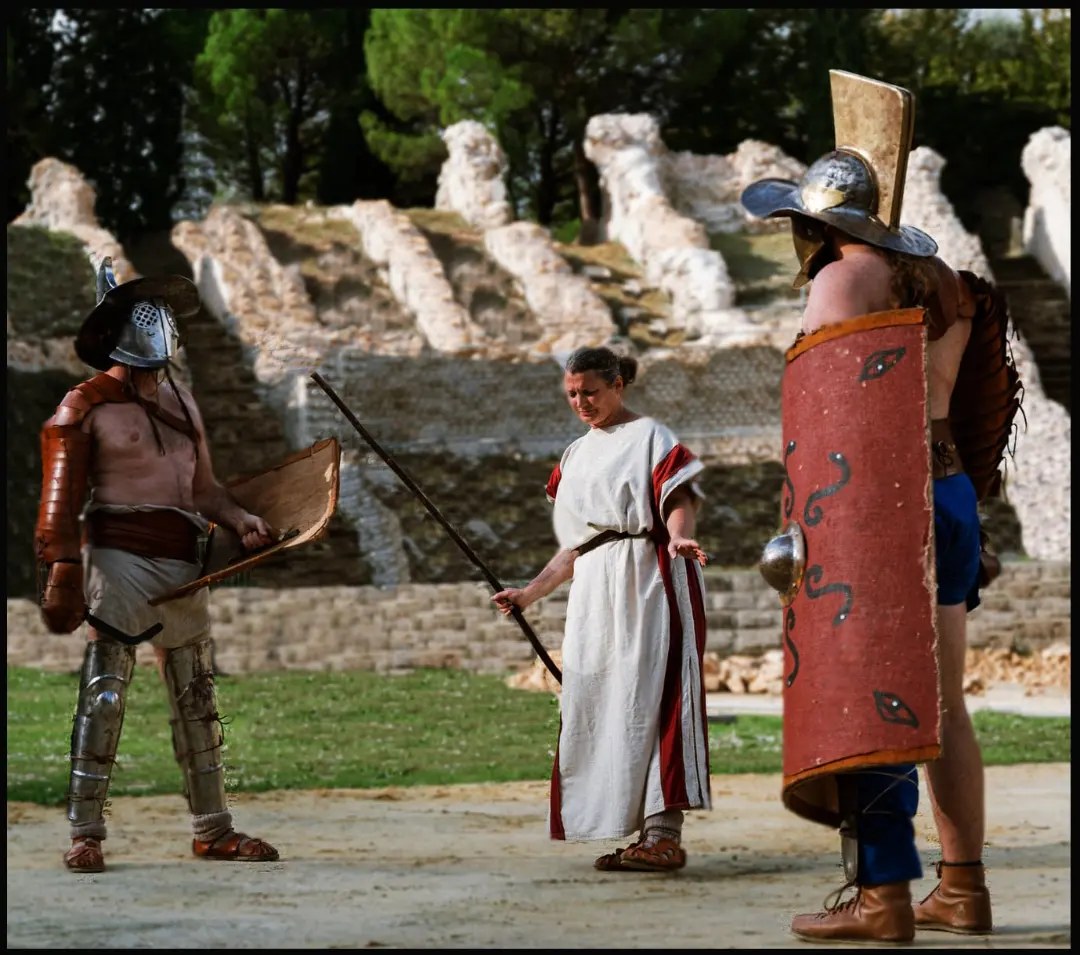
Half an hour by train from Cognac, and here we are in Saintes, once the capital of Roman Aquitaine. You pass in triumph beneath the Arch of Germanicus, standing on the riverbank for twenty centuries. Then you sit a moment in the tiers of the amphitheatre, older than the Colosseum, imagining the roar of the crowd and the fury of the fights.

For a return to calm, the Middle Ages take over, on a human scale. The cool air wraps around you as you go down into the crypt of the church of Saint-Eutrope, a stop on the Way of St James, UNESCO-listed. At the Abbaye aux Dames, now a hive of music, you take a spin on the musical carousel, a sound-walk right up onto the rooftops, and a concert during the summer festival. Two thousand years, and Saintes is still filling its tiers!

©Atelier des Gladiateurs / Pentathlon Club de Saintonge

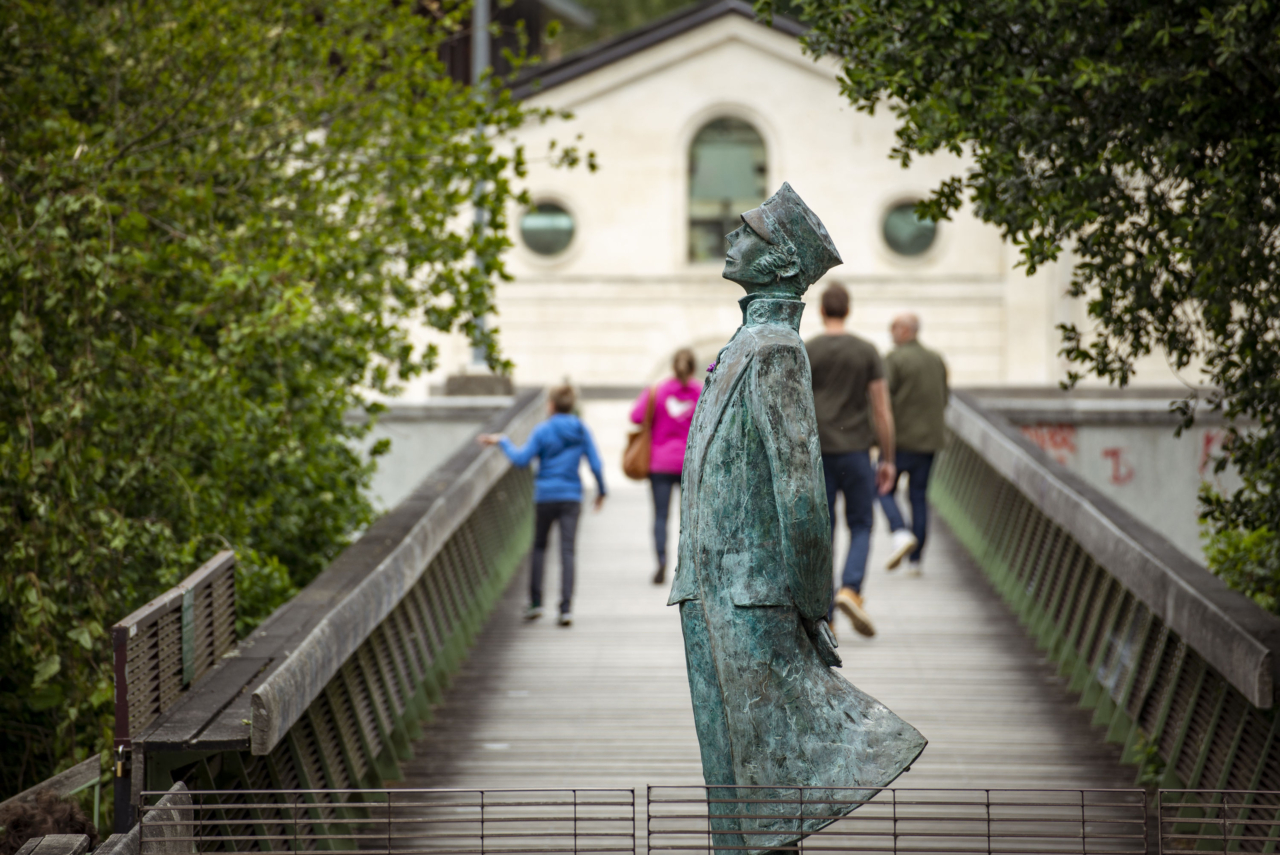
©Angoulême_ passerelle Corto Maltese / Julien Magnan

The town that lives in speech bubbles

Angoulême, town of art, stone and comic strips

In Angoulême, the comic strip greets you at the station and never lets go. Some twenty painted walls turn building gables into giant panels, heroes spill off the façades, and Corto Maltese keeps watch over the former warehouses turned temple of the ninth art. The Cité internationale de la bande dessinée holds a collection unique in Europe, exhibitions, author meet-ups and, every January, a festival that draws the whole world. No wonder Wes Anderson fell for the place, to the point of filming his French Dispatch here.

Because there’s more. Old Angoulême sits high on a plateau ringed by ramparts, a balcony of pale golden stone with sweeping views over the river. In the shops you’ll find the charentaise slipper made to measure, and in the covered market local flavours to take home. And for the morning run, head for the Périph’Vert.

Where the open sea begins

La Rochelle, its Vieux-Port, its aquarium and the Île de Ré

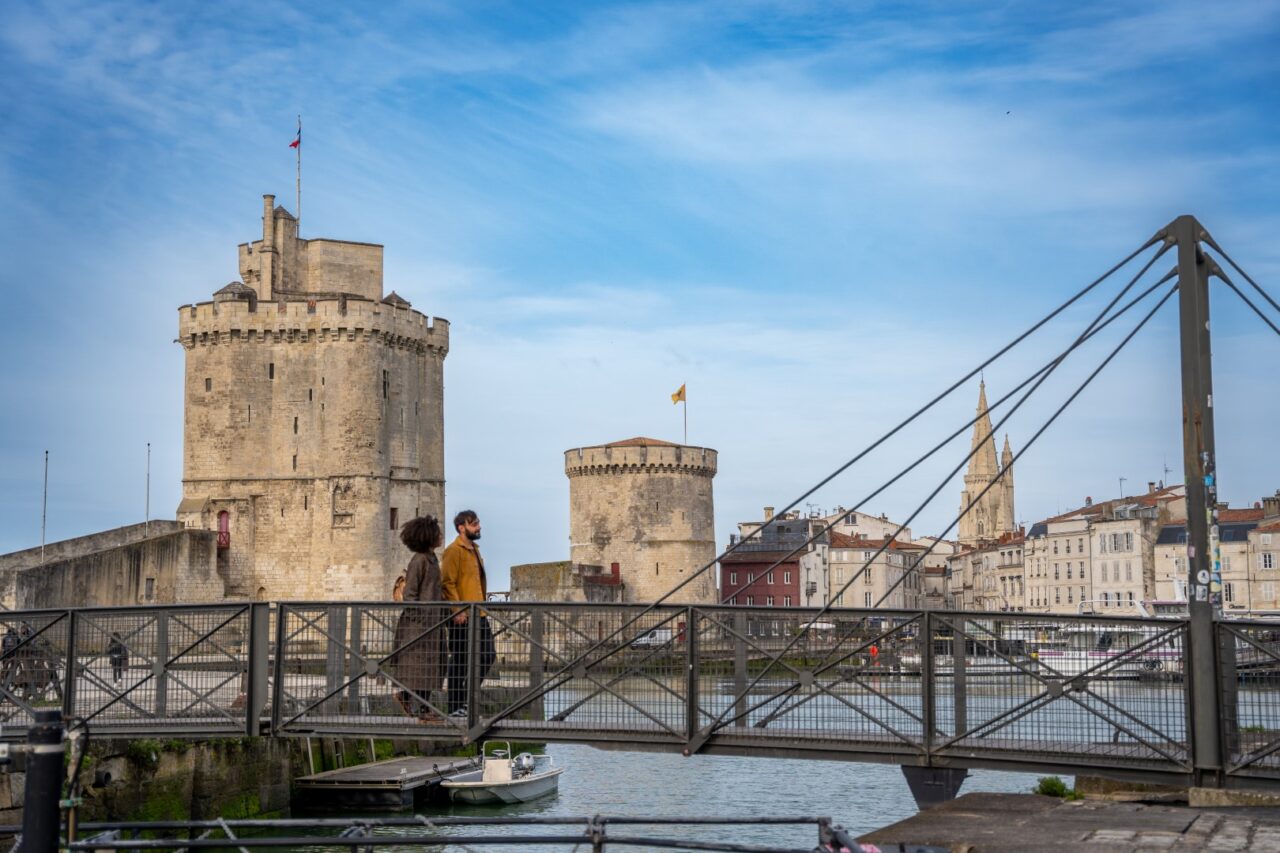
In La Rochelle, everything breathes the ocean. In the clear light of the pertuis (the strait between the islands and the coast) you come out onto the Vieux-Port, its two towers planted like sentinels, the masts chiming, the terraces in the salt air. Then you discover the town in the shade of the arcades. And you follow the cry of the gulls to the Aquarium, tipping into the blue half-light: a jellyfish pulses at eye level, a shadow slides slowly through the shark tunnel.

The Île de Ré is just a stone’s throw away, the bridge crossed by bus or bike. The tempo drops a notch: lanes with lime-washed walls where hollyhocks climb, the scent of pine and marsh, the crunch of salt under the salt-worker’s shovel. In Saint-Martin-de-Ré, you lick an ice cream on the harbour while Vauban’s ramparts, UNESCO-listed, stand guard. You came for the day; you leave reluctantly.

©La Rochelle / CRTNA / FEDER

©Aubeterre-sur-Dronne / CRTPC – P. BAUDRY

Silence carved in stone

Aubeterre-sur-Dronne and its monolithic church

Ready for an unusual visit? As you pass the porch of the church of Saint-Jean in Aubeterre, the atmosphere of the place seizes you. A little dreamlike, a little mysterious. With those openings that filter the light from outside, an imposing reliquary, and above all this nave twenty metres high, ringed by galleries perched overhead. One detail that matters: all of it was dug by hand, in the twelfth century. Wow.

After the quiet, time to meet people. You climb back up into the village through the pale-stone lanes. Several craftspeople have set up their workshops here — a ceramicist, a visual artist, a textile designer. They open their doors without any staging. You watch the gesture, you ask questions, sometimes you try your hand. All around, the vineyard takes over again. At a nearby estate, a grower talks about cognac, his bond with the land and the seasons. From rock to vine, Aubeterre awakens every sense.

I want to ride my bicycle

La Flow Vélo and the cycle routes

The bike may be the finest way to link all of the above. La Flow Vélo hugs the Charente from end to end, from town to sea: you ride among the vines, get off to watch a chain ferry, linger at the guinguette of the next stop. The river sets the tempo, calm, without a hill to catch your breath.

And you choose your horizon. Inland, La Scandibérique leads to the surprising fish-traps of Saint-Simeux. West, La Vélodyssée reaches the ocean, the towers of La Rochelle and the paths of the Île de Ré, between marshes and oyster beds. These routes link up with other loops. A whole network to whistle along, at the pace of a country that doesn’t like to rush.

©Flow Vélo_Mosnac Saint-Simeux/ TTWProduction

©Entrée de Brouage à vélo / Arthur Habudzik

Setting sail for distant seas

Rochefort, the arsenal of Louis XIV and Vauban’s fortifications

It all began with a plan of Louis XIV’s. The king raised this arsenal town from the marshes to build his fleet. You still walk it like an unrolled blueprint, streets drawn straight, the sky immense. You follow the Corderie Royale, so long the eye loses itself along it, and picture the hemp twisted there, strand by strand, to rig the ships bound for the seas of the world.. It was on these quays that La Fayette’s Hermione was born a second time.

Outside, the estuary breathes with the tides, and Vauban, the visionary engineer, still keeps watch. His forts and towers guard the Charente and the islands, all the way to Brouage, a salt port ringed by ramparts with far-reaching views. Another must-see: the house of Pierre Loti — naval officer, writer, compulsive collector. To step inside is to travel from the Gothic to the Orient. Turned towards the open sea, Rochefort ended up bringing it home.

A taste of what awaits you

Set off to explore our destinations: from the foothills of the Pyrenees to hidden villages, from surfing sessions on the coast to hikes in the wide open spaces of the Limousin. You’re bound to find a holiday that takes your fancy.

and to continue exploring

Experience the NOuvelle-Aquitaine

To find out more about the destination or the experiences on offer there, here are a few pages that invite you to continue your exploration, either online or in person.

You might also be interested in