What to Do in Poitiers, the Futuroscope and the Marais Poitevin
Time doesn't quite know where it stands, here: in Poitiers it drifts back to the Middle Ages, at the Futuroscope it races toward tomorrow, and in the Marais Poitevin, between two pollarded ash trees, it grinds to a halt. One destination, a wealth of talents and treasures, and just as many ways to spend your holiday.
Table of contents
You’ll love
Heritage spanning the centuries, from Romanesque to contemporary
Living craftsmanship in medieval towns
Nature to explore your way: by bike, by boat, on foot
The future coming to life for the whole family, at the Futuroscope
Extraordinary places, from romantic ruins to primates roaming free
Nine centuries on, the exuberant façade of Notre-Dame-la-Grande still stops passers-by in their tracks. In the sunlight playing over its carved reliefs, or in the coloured bursts of its night-time illuminations, fantastical creatures and biblical scenes tell of ancient times. A few steps into the historic centre reveal further treasures: Gallo-Roman remains, the Saint-Hilaire church on the Way of St James, and the Palace of the Dukes of Aquitaine, where Eleanor of Aquitaine once held court.
You can feel the particular energy of a university town here, spilling onto café terraces, into shops, into cultural venues. It knows how to slow down too, in the Parc de Blossac or along the Clain riverbank below it. From there, head down to Île Tison to rent a paddleboard or soak up the riverside guinguette atmosphere.
Parthenay, Bressuire and Melle, medieval towns of the Deux-Sèvres
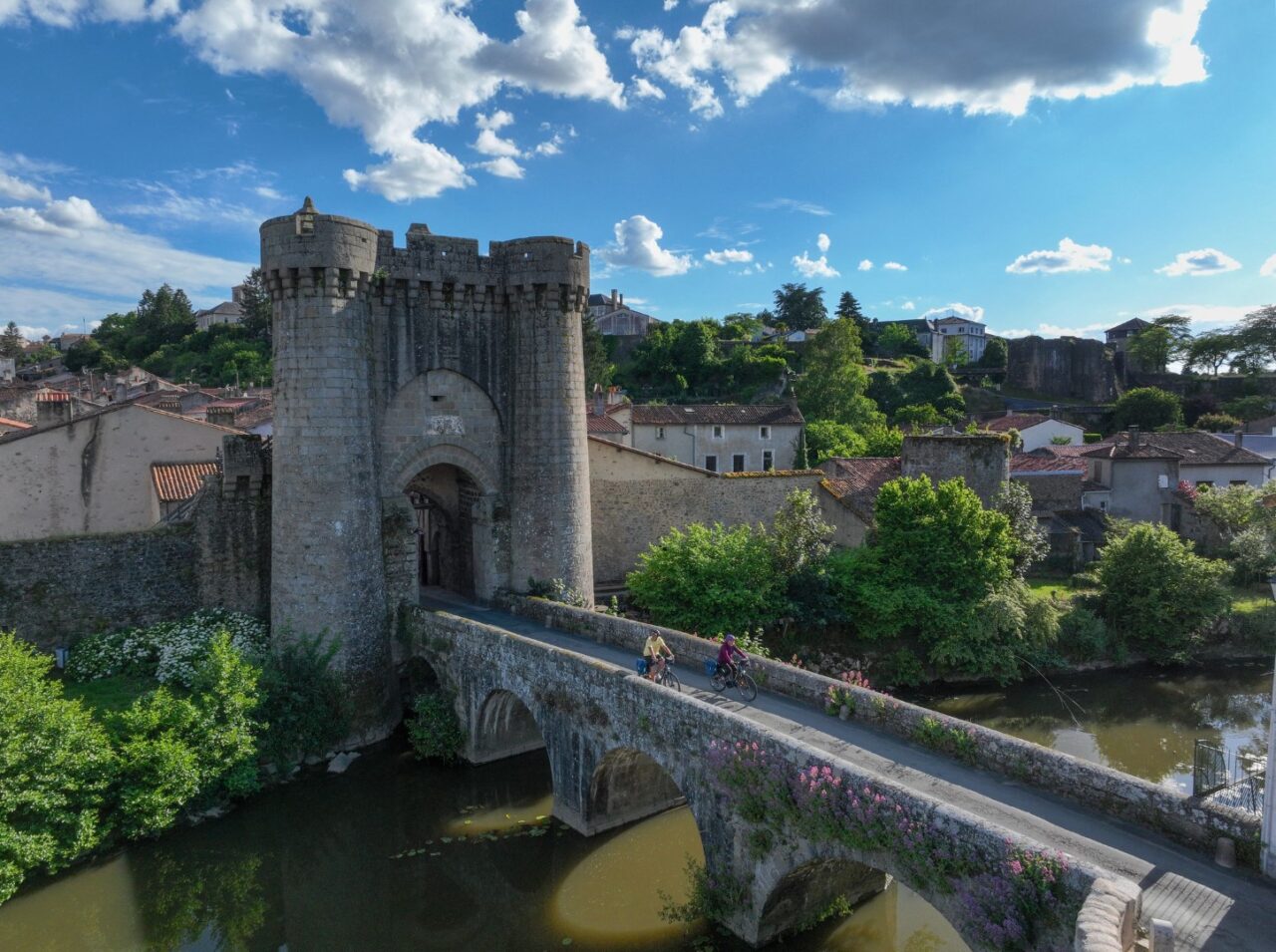
The legend of the fairy Mélusine still lingers around here. You enter Parthenay, the little Carcassonne of the West, over its Romanesque bridge across the Thouet and through the Porte Saint-Jacques, once a stop for pilgrims heading to Compostela. In summer, don’t miss the FLIP (Festival Ludique International de Parthenay), which turns the whole town centre into one giant game board — over four thousand games, free to play, for all ages.
From there, cycle on through oak and chestnut woods to Bressuire, following La Vélidéale route. Watch the light play across the ramparts and through the stained-glass windows of Max Ingrand, a native son of the town. Further south, that same shimmer reveals the wealth of Melle, where you can visit the silver mines once worked in the age of the Kings of France.
A journey to the 11th century, in the Valley of the Frescoes
Saint-Savin, Chauvigny and Montmorillon
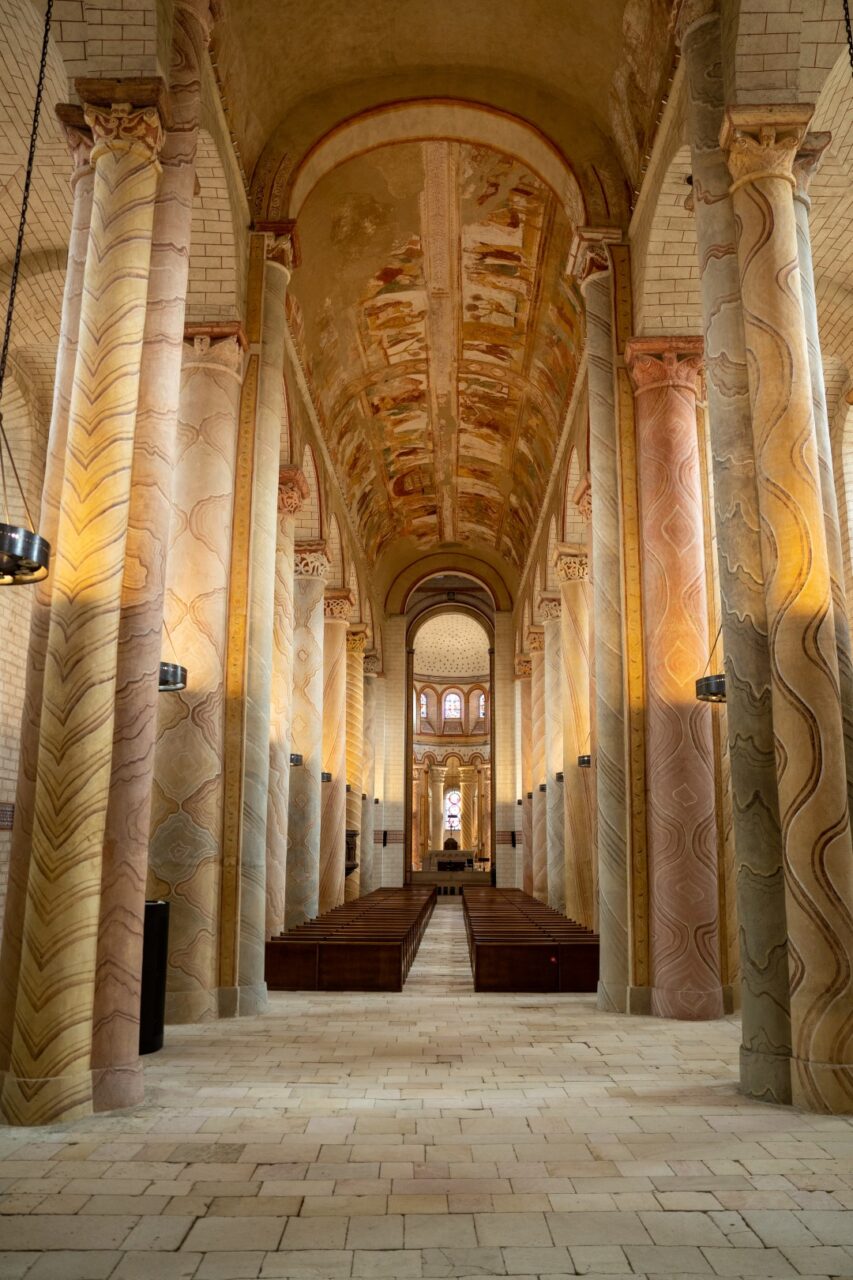
Push open the door of the Abbey of Saint-Savin, a UNESCO World Heritage Site, and you come face to face with frescoes nearly a thousand years old. The colours and sheer scale impose a hush: you look up, you whisper, you marvel. Outside, the Gartempe river offers its banks for a picnic of local produce, while the Valley of the Frescoes strings Romanesque churches all along the road.
Next comes Chauvigny, where five castles still stand shoulder to shoulder on the same ridge, among cobbled streets and the birds of prey wheeling through the Géants du Ciel show. The day ends in Montmorillon, where the air smells of ink and sugar: in the Cité de l’Écrit, the town’s book quarter, you browse an old novel before giving in to a macaron, a local institution since the 17th century.
A boat pushes into the mists of the Bermuda Triangle, the water roars, and then comes a sixteen-metre drop at full speed. Mission Bermudes, the Futuroscope’s latest creation, pulls you into an entirely new kind of adventure. This is a park built for thrills: you soar over the world in giant-screen images, blast off for Mars, and dream through the night-time show, where stories come alive on water and stone.
Right next door, you plunge into the Aquascope, an entirely digital water world voted the world’s best water park in 2024. You move from one pool to the next amid video projections, a world away from any ordinary swimming pool.
Good to know: you can enjoy all this knowing the park has spent several years working toward carbon neutrality, drawing on geothermal energy and other renewables.
La Mothe-Chandeniers and Oiron, two extraordinary castles
Ivy climbs the turrets, and the moat reflects stone scorched by a fire that ravaged the castle in 1932: at la Mothe-Chandeniers, nature has settled in alongside the ruins, to the point of turning them into a work of art in their own right. Abandoned for more than eighty years, the castle was bought back in 2018 through crowdfunding: today, more than 27,000 “co-châtelains”, from over a hundred countries, are its co-owners.
Oiron takes the opposite tack: in Renaissance rooms lined with gilded wood panelling, the Curios & Mirabilia collection slips a unicorn horn, or portraits of schoolchildren by Christian Boltanski, in among 16th-century frescoes. A true cabinet of curiosities, castle-sized.
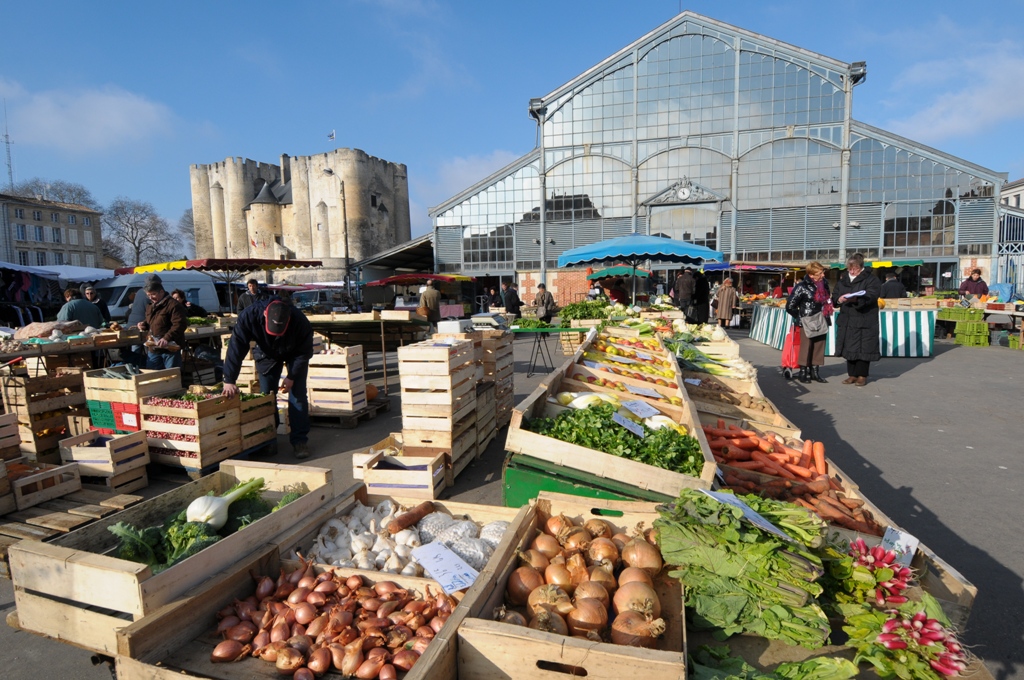
Let your nose lead your eyes. On Saturday mornings, Niort’s market halls fill with the smell of warm bread and goat’s cheese, under a roof built in the Baltard style. Right next door, the medieval keep has stood watch for eight centuries. From there, step into the Musée Bernard d’Agesci or the Villa Pérochon, where fine art, archaeology and photography speak to one another.
You won’t catch the smell of leather at Port Boinot any more. Chamois tanning, that supple leather once made using the waters of the Sèvre, is no longer practised, but it left behind a lasting creative energy. Today, the 36 Quai des Arts boutique brings together jewellers, ceramicists and ironworkers from across the département, and Port Boinot regularly hosts markets showcasing local makers.
Time has stopped here, take as much of it as you like
The Marais Poitevin, aka Green Venice
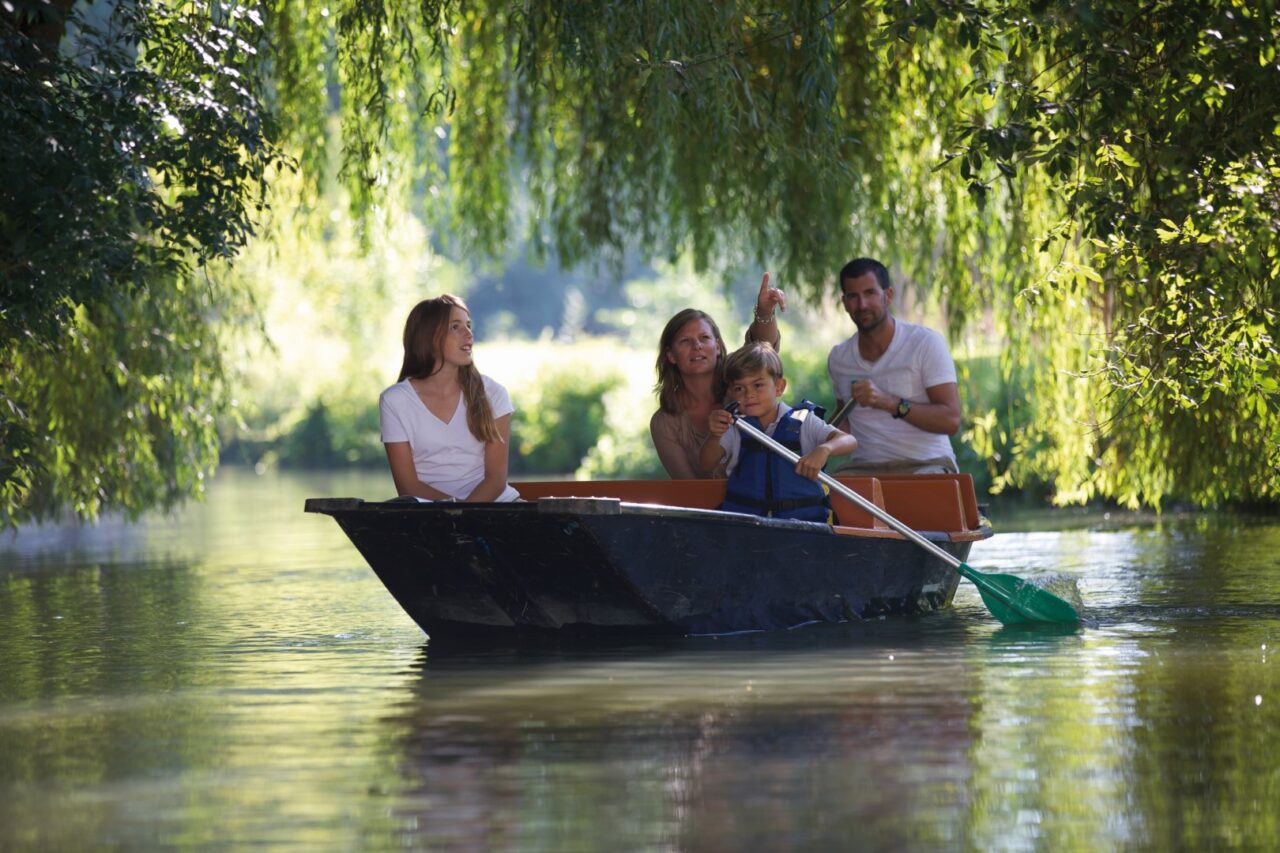
You climb into a flat-bottomed boat, and the Marais Poitevin opens up and closes back in like a maze of greenery. Canals lined with pollarded ash trees, a silence broken only by birdsong. Truth is, it’s nature itself that sings and enchants us. A kingfisher flashes past, a dragonfly comes to say hello. You take your time watching them, sketching them, with the local flora as a backdrop.
You moor at Coulon, Arçais or La Garette, colourful-shuttered marsh villages easily linked by the Vélo Francette cycle route. You pedal on until you find the perfect picnic spot — and there are plenty, across a regional nature park spanning 2,000 square kilometres.
Experience: Les Oiseaux du Marais Poitevin, a bird park in Saint-Hilaire-la-Palud, where more than 80 species (herons, storks, ibises) can be spotted along a shaded trail.
La Vallée des Singes and Défiplanet’, nature and adventure near the Futuroscope
A gorilla ambles up just a few steps away, a mandrill crosses a footbridge over the canal. At la Vallée des Singes, there isn’t a single cageor fence between visitors and the park’s 450 primates. You walk from island to island, among 34 different species. Time your visit around feeding time, and you’re in for a rare treat — a real spectacle for children and adults alike.
Thirty minutes away, Défiplanet’ offers humans their own taste of freedom. You climb through the trees, go horse riding, sleep in a cabin shaped like an animal or perched up in the branches. The eco-designed Lagon cools down summer days, while Mission Areka introduces children as young as three to environmental awareness through an immersive trail.
Set off to explore our destinations: from the foothills of the Pyrenees to hidden villages, from surfing sessions on the coast to hikes in the wide open spaces of the Limousin. You’re bound to find a holiday that takes your fancy.
To find out more about the destination or the experiences on offer there, here are a few pages that invite you to continue your exploration, either online or in person.