Where the River Writes History

The Dordogne Valley and Beyond: 9 Things to See and Do

Cro-Magnon knew a good spot when he saw one. This valley still delivers: historic towns, hilltop villages, castles, gardens, prehistoric caves, a UNESCO biosphere river, and food and wine worth crossing an ocean for. Here are 9 reasons to see it for yourself.
Fifteen thousand years of history, from cave walls to castle ramparts

Castles as far as the eye can see, whichever road you take

Villages and bastides (fortified market towns) ranked among France’s most beautiful

Food and wine worth lingering over

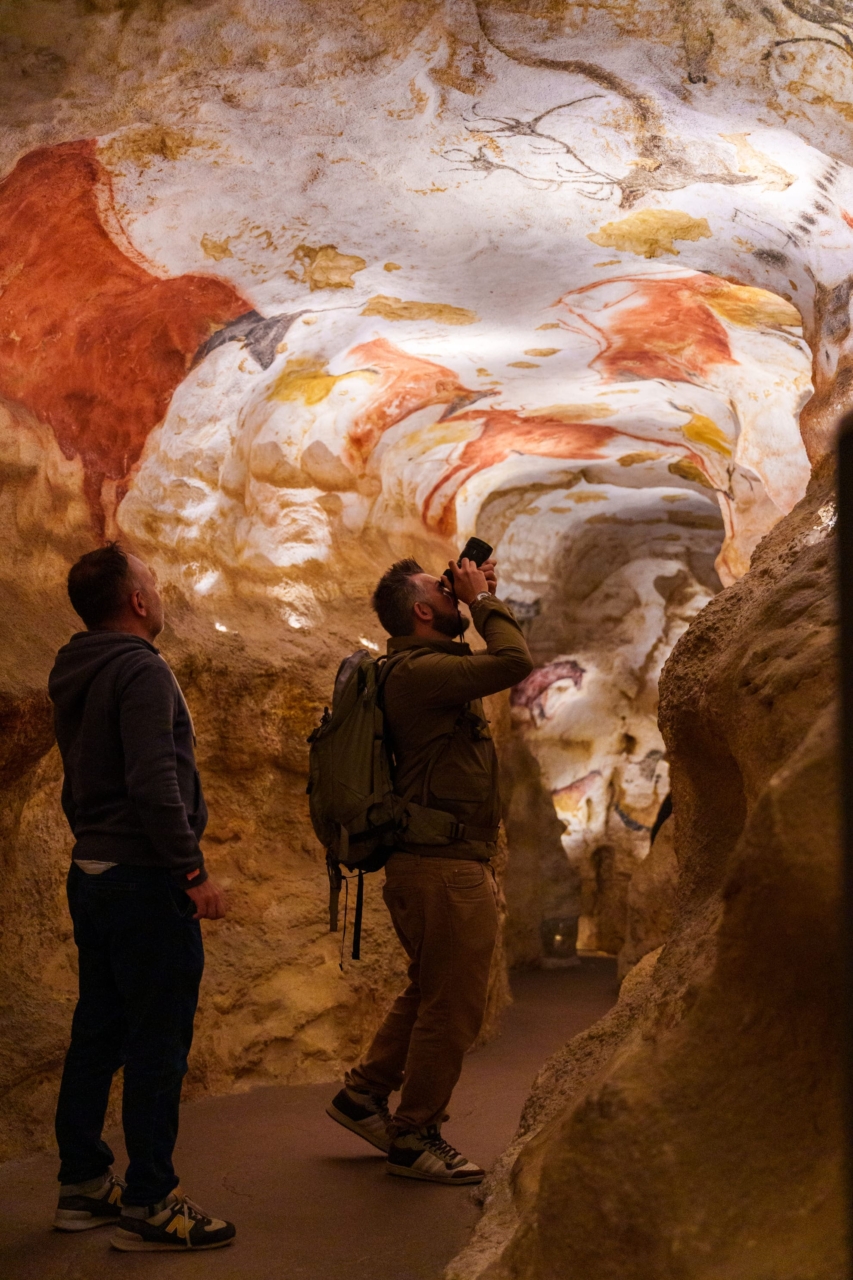
©Lascaux IV / Les Coflocs / CDT 24

The “Sistine Chapel of Prehistory” and its neighbours

Lascaux and the Great Prehistoric Sites of the Vézère Valley

In 1940, four boys searching for their lost dog scrambled into a crevice and found horses and aurochs painted on the walls fifteen thousand years earlier. Lascaux had just reopened to the world.

The original cave stays closed to protect its colours, but its replica, Lascaux IV, recreates every brushstroke with striking precision — right down to the darkness and mystery of stepping back to the very beginning.

Around it, the Vézère Valley is packed with major sites. Explore the cliffside dwellings of La Roque Saint-Christophe, try your hand at cave painting or fire-lighting in a hands-on workshop, then go deeper at the National Museum of Prehistory in Les Eyzies.

Clinging to the Cliff, Standing for a Thousand Years

The Most Beautiful Villages Between the Dordogne and Corrèze

Look up at La Roque-Gageac and the cliff seems to swallow the village whole — or hold it up, depending how you see it. Honey-stone houses stack against the rock face all the way to a troglodyte fort, a hundred and twenty metres above the river. The climb leaves you a little breathless, but the view from the top is worth every step. Back down, wander under the banana trees of the exotic garden, then board a gabare (flat-bottomed river barge) for a fresh look at the village from the water.

Further north, the stone changes colour. In Collonges-la-Rouge, the sandstone turns the colour of dried blood under blue-grey slate roofs. Domme stands guard from its hilltop, its panoramic ramparts hiding a genuinely magical show cave. Castelnaud-la-Chapelle curls up at the foot of its castle. And Turenne, once a viscounty powerful enough to stand up to the kings of France, still keeps watch from its promontory.

©Bastide de Monflanquin / Teddy Verneuil – Lezbroz

The Middle Ages’ New Towns

From Monpazier to Monflanquin: the Bastides of the South-West

Walk through a fortified gate into Monpazier and you step straight into another century, or a film set. A cat dozes in the shade of a timber-framed house, a balcony overflows with flowers, and under the arcades of Place des Cornières, crates spill over with melons or walnuts while conversations linger over a glass of wine.

The South-West has more than three hundred bastides, the Middle Ages’ answer to new towns, built to house merchants and farmers. In Monflanquin, climb up to the Cap del Pech for a view of Château de Biron’s silhouette against the countryside. In Villeréal, Thursday brings its own market, gathered around a rare two-storey market hall.

A Feast for the Eyes and the Taste Buds

Sarlat, Périgueux and Bergerac: Centuries of Life

Saturday morning in Sarlat works up an appetite, stall by stall: strawberries, melons and tomatoes in summer, walnuts, cabécou (goat cheese) and poultry once the weather turns. The eyes feast too, tracing the silhouettes and facades of the medieval houses. It carries on into the evening, when gas lamps light up the lanes for a theatrical backdrop — no festival required.

In Périgueux, wander from Gallo-Roman ruins to Renaissance mansions, watched over by five eyes rather than one (the five domes of Saint-Front Cathedral) with a genuine thrill in store on the rooftop tour. In Bergerac, head down to the quays to dive into the world of wine, then board a gabare under the bronze nose of Cyrano, who stands watch on Place de la Myrpe between two half-timbered houses.

©Sarlat / CRTNA – Les Coflocs

©La Vallée de la Dordogne depuis Beynac / CRTNA – Clara Ferrand

The Valley of a Thousand Castles

Castelnaud, Beynac and Many More

Forget the history books: this is the Middle Ages as a field trip. At Castelnaud, fire a crossbow and watch a trebuchet launch a stone boulder. From the ramparts, spot the silhouette of Beynac, its old rival, across the river. Feel free to daydream like a troubadour over the panoramic view of the Dordogne, or get up close to the patchwork of stone houses and cliffside villages on a via ferrata.

Back on the road, or in a canoe, the search for the next tower never really stops. Among the must-sees: Marqueyssac‘s hanging gardens, the Milandes, once home to Joséphine Baker… Eventually, you lose count.

A Gardener’s Patience, a Feast for the Senses

Eyrignac and the Gardens of the Périgord

At Eyrignac, kick off your shoes to feel the cool grass underfoot while water from seven springs murmurs between the topiary. Yew, box and hornbeam are clipped into spheres, cones and waves, as if a hedge had taken ballet lessons. Linger in the white garden, five hundred rose bushes around five ponds, before slipping under the hornbeam walk, a hundred metres of perfectly aligned green shade.

Further on, the box hedges of Marqueyssac roll like waves along the clifftop, facing Château de Castelnaud. In Terrasson, the Jardins de l’Imaginaire tell thirteen tales of water, bamboo and waterfalls. In Limeuil, climb to the old hilltop fort for a 360-degree panorama over the meeting point of the Dordogne and Vézère rivers.

©Jardins de Marqueyssac / Emanuele_Bartolini-CRTNA

©Brive-la-Gaillarde / CRTNA-FEDER

A Slice of Local Life

Brive Market and the Flavours of the South-West

In Brive-la-Gaillarde, under the Halle Georges-Brassens (named after the singer who made it famous without ever setting foot in it) more than two hundred producers set up their stalls at dawn, three mornings a week. In winter, truffles take over: every Saturday from December to February, a sworn inspector checks each batch before the bell rings the market open.

Across the valley, the same ritual plays out under other market halls: Périgord walnuts, foie gras, wild mushrooms, cabécou and Bergerac-Duras wines change hands along with a recipe or two. A walnut tasting often leads to the Denoix distillery, in Brive since 1839, where the fruit is turned into an amber liqueur.

Here, Mould Works Miracles

Monbazillac and the Bergerac-Duras Vineyards

There’s real pleasure in tasting a great wine in its birthplace. At Château de Monbazillac, vine terraces stretch out over the valley, and the wine itself, so the story goes, was born of an oversight. In the Middle Ages, monks busy elsewhere are said to have left their grapes on the vine too long, until a microscopic fungus, noble rot, coated them in a grey haze. They harvested anyway… and discovered a golden nectar with the scent of honey and candied apricot.

The wine route winds on toward Bergerac and Pécharmant, on the hillsides above the Dordogne, then south to Duras, on the banks of the Dropt. Taste at the winemaker’s cellar, ask for advice at the Maison des Vins on Quai Cyrano, or carry the tasting through to the table, paired with local, seasonal dishes. Cheers.

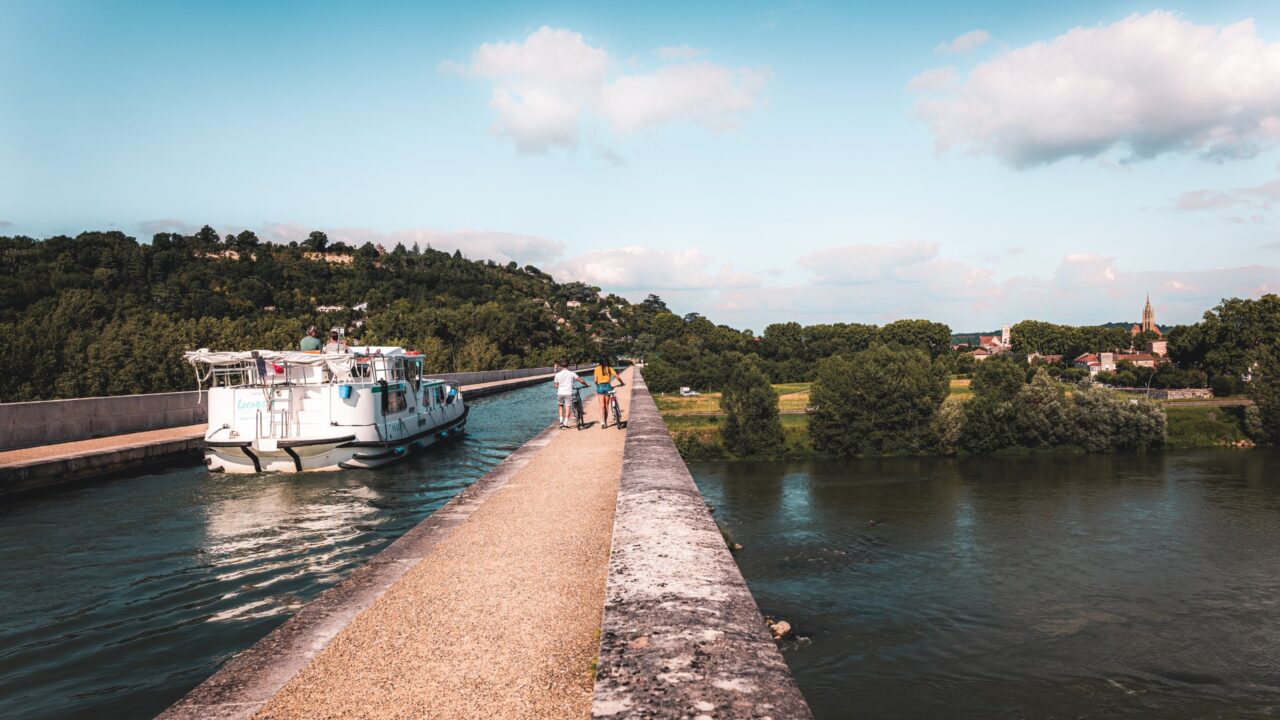
©Le Pont-Canal d’Agen / Teddy Verneuil Lezbroz

Between the Garonne and the Canal des Deux Mers

Agen, at the Heart of South-West Culture

There’s rugby, there are prunes (the gourmet emblem of a generous terroir) and there’s the river with its side canal, an engineering feat that peaks here with the pont-canal (canal bridge) crossing the Garonne. You could spend all day admiring one, tasting another (plain, in Armagnac, or chocolate-coated at an artisan shop downtown) and marvelling at the third.

In the old town’s lanes, half-timbered houses lead the way to the Renaissance mansions housing the Musée des Beaux-Arts. It’s an easy step from there to a walk or bike ride between plane trees and locks along the Canal des Deux Mers, or even a short boat trip on the water.

A taste of what awaits you

Set off to explore our destinations: from the foothills of the Pyrenees to hidden villages, from surfing sessions on the coast to hikes in the wide open spaces of the Limousin. You’re bound to find a holiday that takes your fancy.

and to continue exploring

Experience the NOuvelle-Aquitaine

To find out more about the destination or the experiences on offer there, here are a few pages that invite you to continue your exploration, either online or in person.